
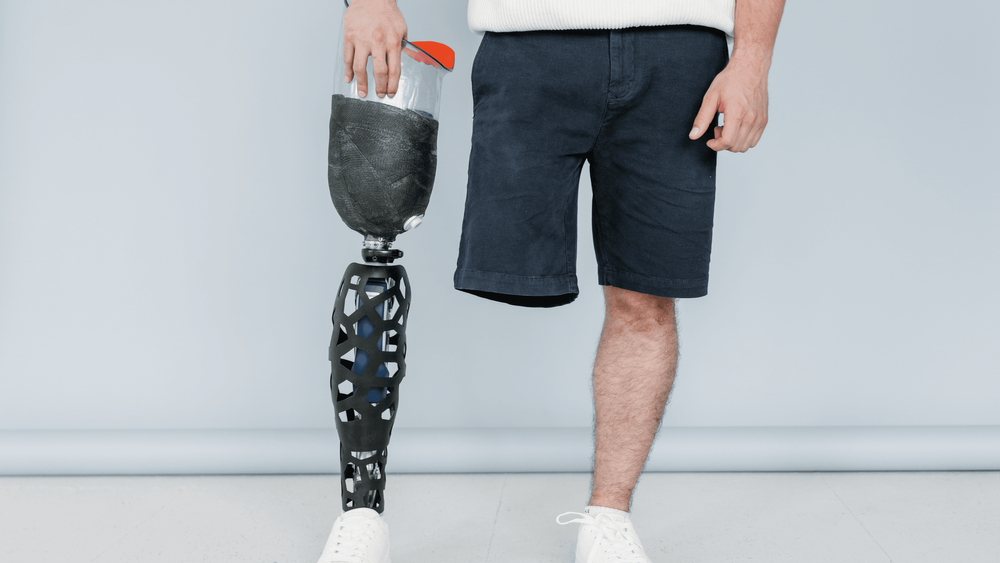
3D Printing of Prosthetic Limbs
Developing and manufacturing prosthetic limbs using 3D printing: digital scanning/design, rapid fabrication, fitting, and affordable customized solutions.
Project Description:
The project “3D Printing of Prosthetic Limbs” aims to establish a specialized center in Syria for the design, production, and fitting of customized prosthetic limbs using 3D printing technology. The proposal is presented by Mubadara Qanawat – Biomedical Engineering Office, and the implementation is intended to take place inside Syria. The project targets people who have experienced amputations due to war, accidents, or other causes. A special focus is placed on children and adolescents, because they grow quickly and therefore need frequent prosthetic replacements and adjustments, making them one of the most affected groups when services are limited.
Context and problem:
Syria has a very high number of amputees, while modern prosthetic systems, especially advanced or programmed devices, are extremely expensive, difficult to obtain, and often hard to import. As a result, many people receive inadequate prosthetic solutions or no prosthetic care at all, which severely affects mobility, independence, social participation, and psychological well-being. This project responds to that need by creating a local, sustainable, and affordable Syrian solution that reduces reliance on imports and strengthens national medical-technical capabilities.
Target group and benefits:
The project serves all amputees across Syria, regardless of age or region, while prioritizing those with urgent needs. By using digital measurement and CAD-based design, the prostheses can be individually customized to fit each person more accurately, improving comfort, function, and safety. For children and adolescents, the main benefit is faster and more cost-effective re-fitting as they grow, avoiding long waiting times and financial burden. Overall, the project aims to improve quality of life by restoring movement, supporting independence, and enabling people to participate more actively in daily life.
Approach and structure:
The core of the project is to create a 3D-printed prosthetics center that operates within a broader network of experts and specialists inside and outside Syria. This network approach helps pool expertise, reduce duplicated efforts, coordinate implementation, and strengthen cooperation with organizations working on the ground. In this way, the project becomes not only a production site but also a platform for continuous improvement, training, and future development of better prosthetic solutions.
Implementation method:
Prosthetic production follows a clear workflow:
1. Measuring and assessing the amputated limb (shape, pressure points, functional needs)
2. Designing the prosthesis using CAD software (personalized digital model)
3. Producing the prosthesis via 3D printing (rapid, precise fabrication)
4. Fitting and adjusting the device to ensure proper comfort and performance
5. Providing physiotherapy support so the patient can learn safe and effective use in everyday life
This process ensures the prostheses are not one-size-fits-all, but tailored to each individual, which improves practicality and long-term use.
Planned outputs:
The project plans to establish the first center as a starting point, including funding support through the Syrian Development Fund. Over time, services are intended to expand to cover all Syrian provinces, ensuring access beyond major cities. The target capacity is at least 50 prostheses per month. In addition, the project includes training and qualifying local technical staff in design, production, fitting, and follow-up care, supporting skills development and creating job opportunities.
Long-term impact:
Beyond immediate prosthetic delivery, the project aims to reduce costs, improve access, and build a foundation for Syria to eventually develop and produce more advanced smart prosthetic systems locally. It contributes to strengthening healthcare-related infrastructure, enabling knowledge transfer, and supporting recovery and rebuilding efforts. Ultimately, it is designed to restore mobility, enhance independence, and improve psychological and social well-being for people living with amputations in Syria.
Apply to Participate
Currently, there are no specific application forms for this project. Please check back later or contact us for general volunteering inquiries.